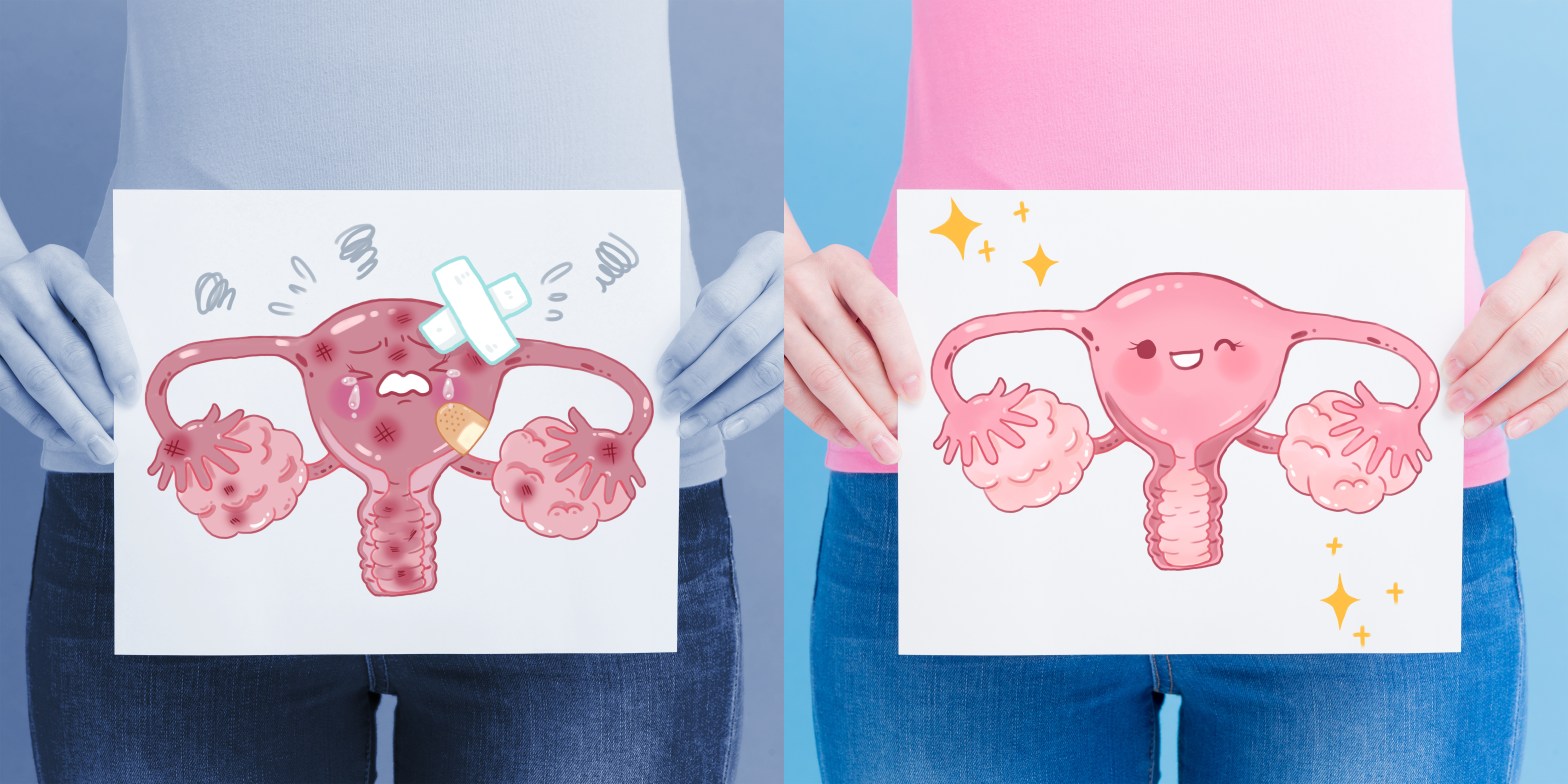
(Featured Image: https://stock.adobe.com/uk/images/woman-take-uterus-billboard/199738093?prev_url=detail (Licensed))
Dear Reader,
In the last post, I asked you to guess which month was world endometriosis awareness celebrated- It’s March.[1]
Now that endometriosis is confirmed, the treatment plan is focused on managing pain, trying to limit the progression of the implants, and addressing the associated issues with fertility.
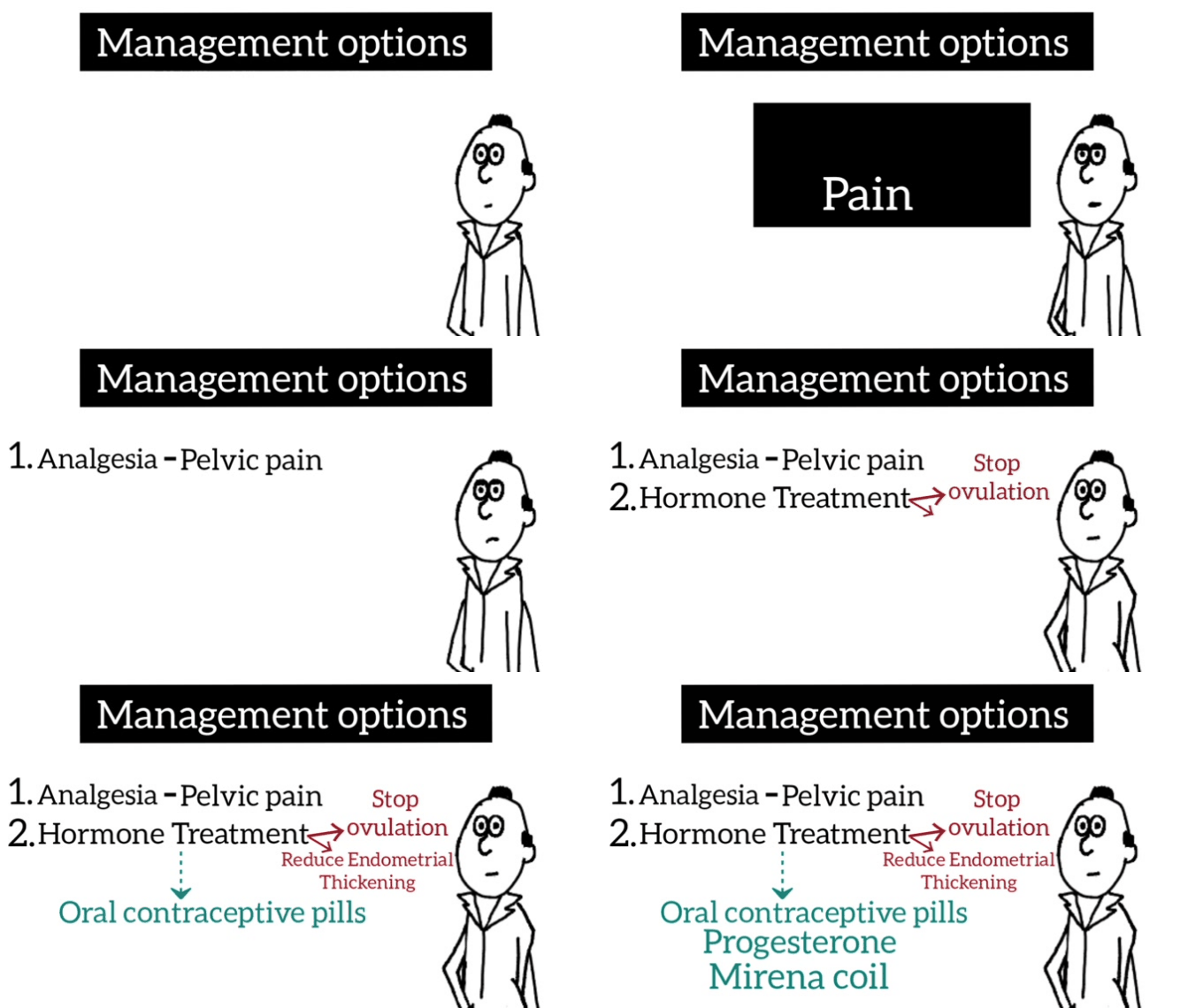
- The European Society of Human Reproduction and Embryology guideline for Endometriosis recommends the use of non-Steroidal Anti-Inflammatory Drugs or other analgesics to reduce endometriosis-associated pain.[12]
- The guideline recommends prescribing hormonal treatment—combined Oral Contraceptives, progestagens, anti-progestogens, or GnRH agonists—“as one of the options, as it reduces endometriosis-associated pain”[12]
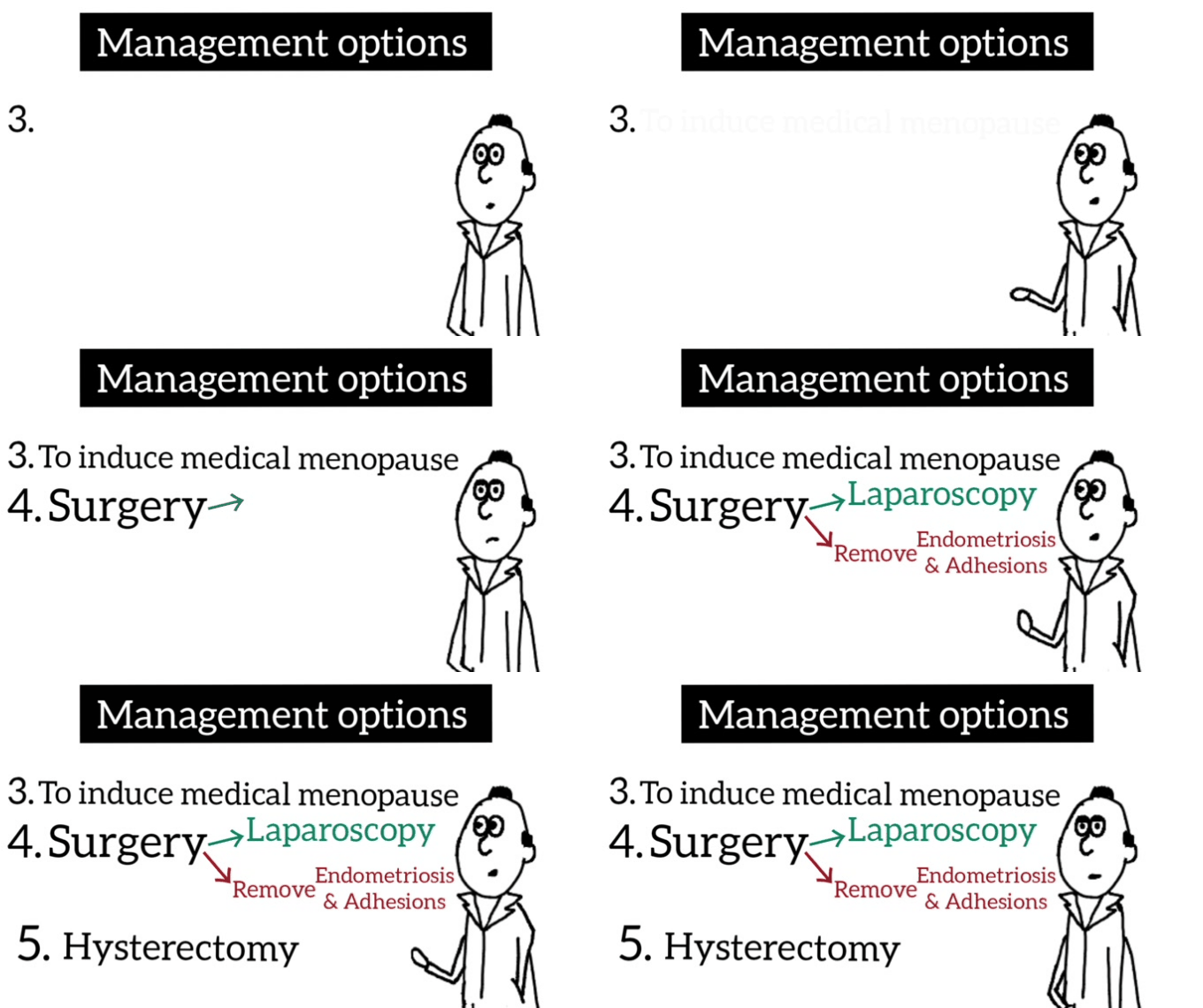
If Non-Steroidal Anti-Inflammatory Drugs and hormonal contraceptives are ineffective, the next step is treatment with a
GnRH analog such as leuprolide or goserelin (Zoladex), aka ‘medical menopause.’[13]
However, the therapy causes adverse effects, such as hot flashes, night sweats, and
possible bone loss, in many women (basically inducing the side effects of menopause). [13]
Infertility is a major complication and cannot be treated via medical therapy, like all medical treatments available for endometriosis work by suppressing ovulation.[3,5]
Surgical management is the primary treatment as it can improve the patient’s probability of spontaneous conception or pave the path for in vitro fertilization (IVF) in patients with severe endometriosis [3,5].
Patients with severe pain refractory to medical therapy also can benefit from surgery, as shown by the pain relief experienced by up to 95% of patients who underwent laparoscopy to excise lesions [3,5].
Hysterectomy (a surgical procedure to remove the womb/uterus) has been suggested for women with severe, debilitating, and refractory endometriosis who do not wish to become pregnant and in whom other therapeutic measures have failed [3,6].
Sad Disclaimer Alert!
Endometriotic lesions that recur after surgery have been found to occur in the same vicinity as the previous lesions and patients who undergo conservative surgery have a higher likelihood of recurrence, as some small residual implants might remain post-operatively [4].
—end of the alert—
This is why many Endometriosis sufferers undergo numerous surgeries in their lifetime until menopause actually sets in.
In my next post, I have included a prologue of Ease from disease Part II to make sense of what I will convey in the last, final blog post.
I hope you can get the gist what I’m trying to convey. It can get a little bit overwhelming right now due to the terminology. If any questions are bubbling in mind, please do ask!
Until next time,
With love,
Palasha.
References:
- En.wikipedia.org. (2020). Worldwide Endometriosis March. [online] Available at: https://en.wikipedia.org/wiki/Worldwide_Endometriosis_March [Accessed 4 Jan. 2020].
- Alimi, Y., Iwanaga, J., Loukas, M., & Tubbs, R. S. (2018). The Clinical Anatomy of Endometriosis: A Review. Cureus, 10(9), e3361. DOI:10.7759/cureus.3361
- Hurt KJ. Philadelphia, PA: Wolters Kluwer Health; 2015. Pocket Obstetrics and Gynecology.
- Koga, K., Takamura, M., Fujii, T., & Osuga, Y. (2015). Prevention of the recurrence of symptoms and lesions after conservative surgery for endometriosis. Fertility and Sterility, 104(4), 793–801. DOI:10.1016/j.fertnstert.2015.08.026
- A focus on the medical management of endometriosis. Casper RF: Introduction. Fertil Steril. 2017;107:521–522.
- Kim, S., Falcone, T., & Flyckt, R. (2017). Surgical Management of Endometriosis in Patients with Chronic Pelvic Pain. Seminars in Reproductive Medicine, 35(01), 054–064. DOI:10.1055/s-0036-1597306
- Maheux-Lacroix, S., Nesbitt-Hawes, E., Deans, R., Won, H., Budden, A., Adamson, D., & Abbott, J. A. (2017). The endometriosis fertility index predicts live births following surgical resection of moderate and severe endometriosis. Human Reproduction, 32(11), 2243–2249. DOI:10.1093/humrep/dex291
- Prescott, J., Farland, L. V., Tobias, D. K., Gaskins, A. J., Spiegelman, D., Chavarro, J. E., … Missmer, S. A. (2016). A prospective cohort study of endometriosis and subsequent risk of infertility. Human Reproduction, 31(7), 1475–1482. DOI:10.1093/humrep/dew085
- Evans, S. F., Brooks, T. A., Esterman, A. J., Hull, M. L., & Rolan, P. E. (2018). The comorbidities of dysmenorrhea: a clinical survey comparing symptom profile in women with and without endometriosis. Journal of Pain Research, Volume 11, 3181–3194. DOI:10.2147/jpr.s179409
- Doggweiler, R., Whitmore, K. E., Meijlink, J. M., Drake, M. J., Frawley, H., Nordling, J., … Tomoe, H. (2016). A standard for terminology in chronic pelvic pain syndromes: A report from the chronic pelvic pain working group of the international continence society. Neurourology and Urodynamics, 36(4), 984–1008. DOI:10.1002/nau.23072
- Orr, N. L., Noga, H., Williams, C., Allaire, C., Bedaiwy, M. A., Lisonkova, S., … Yong, P. J. (2018). Deep Dyspareunia in Endometriosis: Role of the Bladder and Pelvic Floor. The Journal of Sexual Medicine, 15(8), 1158–1166. DOI:10.1016/j.jsxm.2018.06.007
- Eshre.eu. (2013). Endometriosis guideline. [online] Available at: https://www.eshre.eu/Guidelines-and-Legal/Guidelines/Endometriosis-guideline.aspx [Accessed 6 Jan. 2020].
- Schrager, S., Falleroni, J., & Edgoose, J. (2013). Evaluation and treatment of endometriosis. Am Fam Physician, 87(2), 107-113.
 ♂THE PELVIC PHYSIO♀