Continued from the excepts of the last post:
Koga et al. proposed that the prolonged use of the medical therapy post-surgery (higher than 6 months) can prevent recurrence of painful cramps(dysmenorrhoea) in most patients, but has little to no effect in controlling recurrent chronic pelvic pain or painful intercourse (dyspareunia) [9].
Most people with Chronic Pelvic Pain or Endometriosis have adverse sexual effects, including severe deep dyspareunia, which is associated with pelvic floor muscle (PFM) muscle pain/myalgia regardless of stage/location of endometriosis. [10]
Just a quick interruption in the flow!
I would like to quickly mention the anatomy of the pelvic floor muscles since these are the ones getting affected in the pelvic floor myalgia condition.
A pelvic examination(as tolerated by the patient) by the pelvic physiotherapist can reveal which one of the pelvic floor muscles are spasmed or tight or weak.
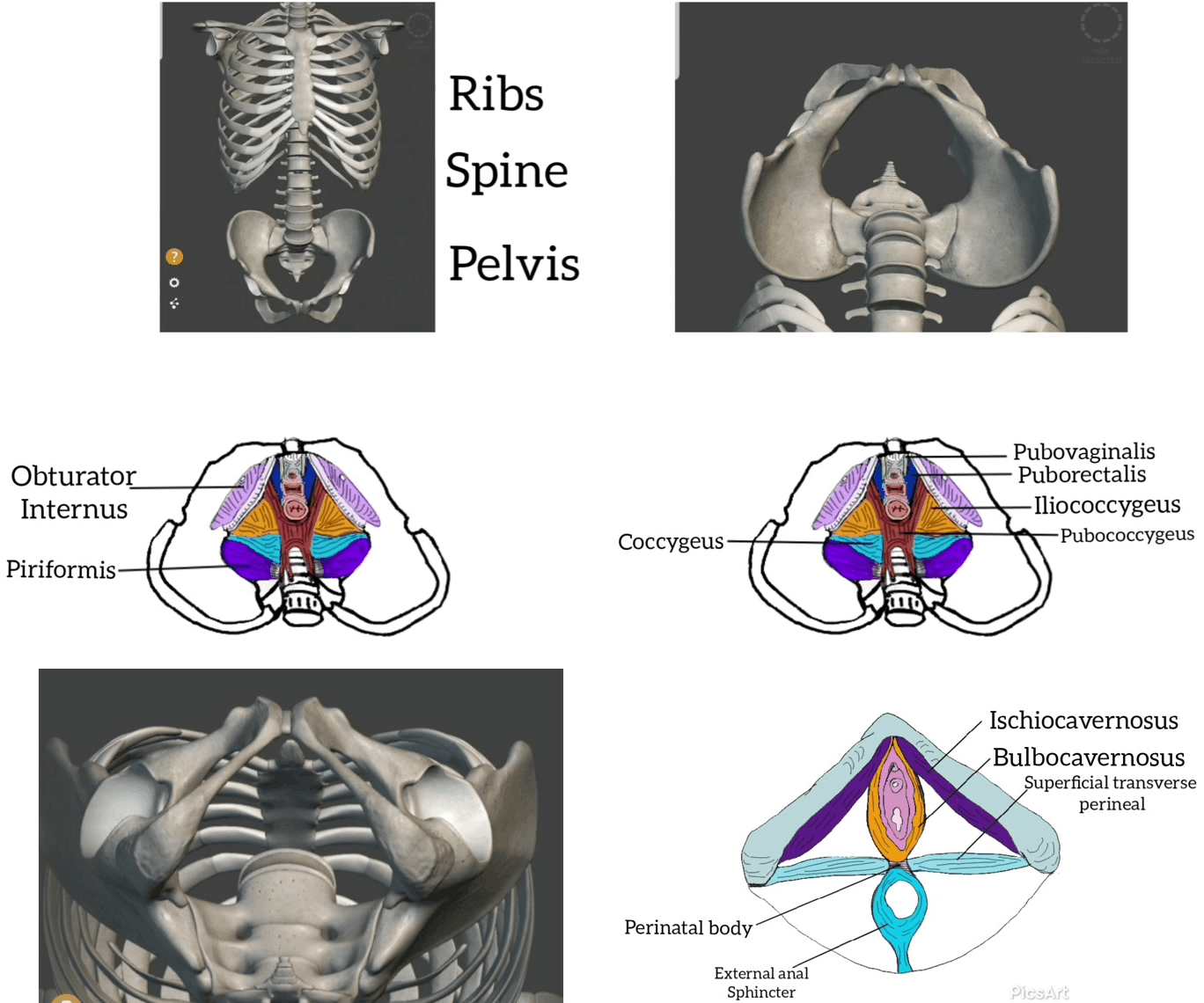
Women have an increased prevalence of Pelvic Floor Myalgia and obturator internus spasm and increased muscle tightness(Hypertonicity).
Reduced flexibility, dyssynergia (uncoordinated and abrupt movements), altered motor control with a habitual holding pattern, and reduced capacity to relax their pelvic floor myalgia may also be present both in the voluntary and functional scenarios.[14,15]
Abnormal findings:
Apical breathing (upper chest breathing) with a braced abdominal wall is typical.
Positive Carnett’s sign may suggest an abdominal wall or nerve irritation components to pelvic pain.[3]
Positive Carnett’s sign: If the tenderness is unchanged or increased when abdominal muscles are tensed.
- Pelvic floor myalgias may contract involuntarily in response to threat and occur without conscious awareness.[2]
FitzGerald and Kotarinos found the muscles of the pelvic floor are, in some cases, short, tender, and dysfunctional in women with chronic pelvic pain (CPP) [5].
Those dysfunctions may be due to the misalignment of pelvic structures. [6,7]. Those muscle imbalance patterns resulting from Chronic Pelvic Pain may create constant stretching of the pelvic floor muscles, leading to weakness and emergence of muscle spasms and/or trigger points that, then, exacerbate or prolong the pain.[4]
To conclude II-A:
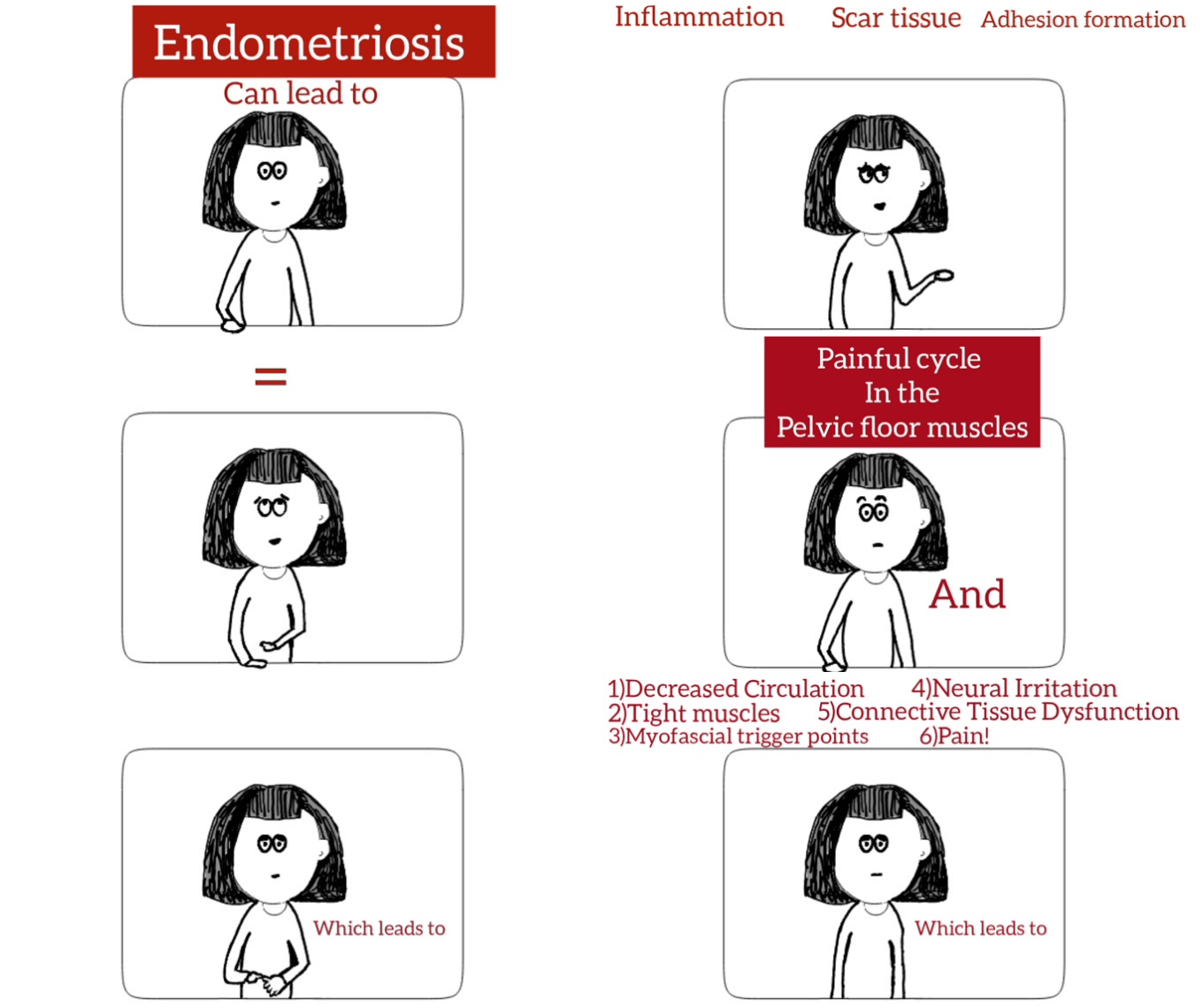
Chronic pelvic pain severity is associated with the abdominal wall and Pelvic floor muscle myalgia and observed in women with endometriosis.[4] [11,12]
Endometriosis can produce secondary musculoskeletal impairments that may be amenable to physical therapy intervention. [11,12]
Pelvic visceral disorders frequently produce lumbar, sacroiliac, and pelvic-floor referred pain, which can result in muscle spasms, trigger points, and connective tissue dysfunction. [11]
References:
- Doggweiler, R., Whitmore, K. E., Meijlink, J. M., Drake, M. J., Frawley, H., Nordling, J., … Tomoe, H. (2016). A standard for terminology in chronic pelvic pain syndromes: A report from the chronic pelvic pain working group of the international continence society. Neurourology and Urodynamics, 36(4), 984–1008. DOI:10.1002/nau.23072
- Van der Velde, J., & Everaerd, W. (2001). The relationship between involuntary pelvic floor muscle activity, muscle awareness, and experienced threat in women with and without vaginismus. Behaviour Research and Therapy, 39(4), 395–408. DOI:10.1016/s0005-7967(00)00007-3
- Allaire, C., Aksoy, T., Bedaiwy, M., Britnell, S., Noga, H. L., Yager, H., & Yong, P. J. (2017). An Interdisciplinary Approach to Endometriosis-associated Persistent Pelvic Pain. Journal of Endometriosis and Pelvic Pain Disorders, 9(2), 77–86. https://doi.org/10.5301/jeppd.5000284
- Jarrell, J. Curr (2011) Endometriosis and Abdominal Myofascial Pain in Adults and Adolescents. Pain Headache Rep 15: 368. https://doi.org/10.1007/s11916-011-0218-y
- Dos Bispo, A. P. S., Ploger, C., Loureiro, A. F., Sato, H., Kolpeman, A., Girão, M. J. B. C., & Schor, E. (2016). Assessment of pelvic floor muscles in women with deep endometriosis. Archives of Gynecology and Obstetrics, 294(3), 519–523. DOI:10.1007/s00404-016-4025-x
- Lukic A, Di Properzio M, De Carlo S, Nobili F, Schimberni M,
Bianchi P, Prestigiacomo C, Moscarini M, Caserta D (2015)
Quality of sex life in endometriosis patients with deep dyspareunia before and after laparoscopic treatment. Arch Gynecol
Obstet. DOI:10.1007/s00404-015-3832-9 - Neville CE, Fitzgerald CM, Mallinson T, Badillo S, Hynes C, Tu F (2012) A preliminary report of musculoskeletal dysfunction in female chronic pelvic pain: a blinded study of examination findings. J Bodyw Mov Ther 16:50–56
- Tu FF, Holt J, Gonzales J, Fitzgerald CM (2008) Physical therapy
evaluation of patients with chronic pelvic pain: a controlled
study. Am J Obstet Gynecol 272(e1-272):e7 - Koga, K., Takamura, M., Fujii, T., & Osuga, Y. (2015). Prevention of the recurrence of symptoms and lesions after conservative surgery for endometriosis. Fertility and Sterility, 104(4), 793–801. DOI:10.1016/j.fertnstert.2015.08.026
- Orr, N. L., Noga, H., Williams, C., Allaire, C., Bedaiwy, M. A., Lisonkova, S., … Yong, P. J. (2018). Deep Dyspareunia in Endometriosis: Role of the Bladder and Pelvic Floor. The Journal of Sexual Medicine, 15(8), 1158–1166. DOI:10.1016/j.jsxm.2018.06.007
- Troyer, M. R. (2007). Differential Diagnosis of Endometriosis in a Young Adult Woman With Nonspecific Low Back Pain. Physical Therapy, 87(6), 801–810. DOI:10.2522/ptj.20060141
- Prendergast SA, Weiss JM. Screening for musculoskeletal causes of pelvic pain.
Clin Obstet Gynecol. 2003;46:773–782. - Primal Pictures Ltd. Anatomy.tv. London: Primal Pictures, 2001. Web.
- C Allaire, T Aksoy, M Bedaiwy, et al. An interdisciplinary approach to endometriosis-associated persistent pelvic pain. Journal of Endometriosis and Pelvic Pain Disorders. 2017;9(2):77-86.
- K Bo, HC Frawley, BT Haylen, et al. An International Urogynecological Association (IUGA)/International Continence Society (ICS) joint report on the terminology for the conservative and nonpharmacological management of female pelvic or dysfunction. Neurourol Urodynam. 2016;9999:1-24.
 ♂THE PELVIC PHYSIO♀